92% GHG reduction at Vanier College through decarbonization
92 %
GHG reduction
$1.5M
in financial incentives
$114,800
in annual savings
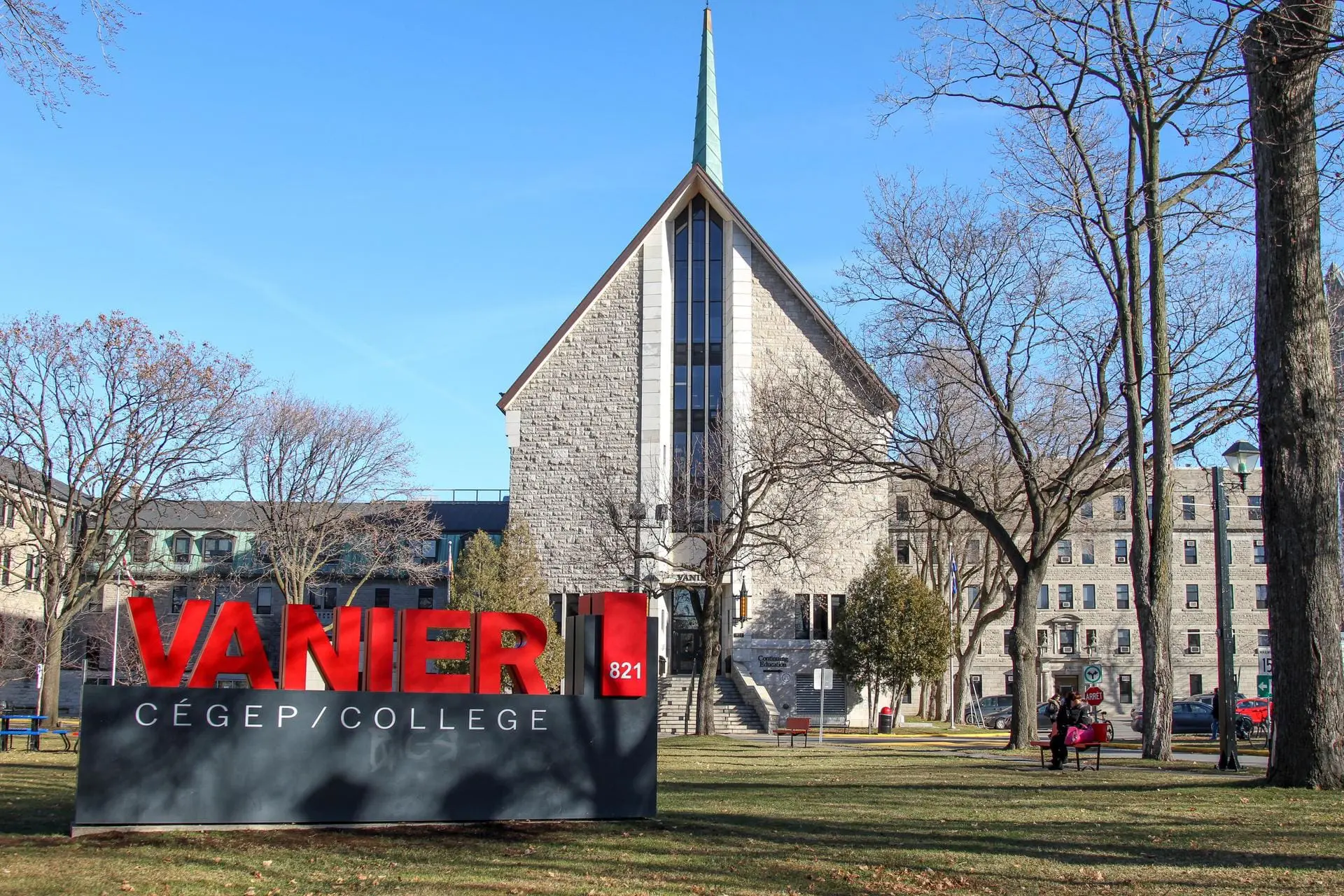
Vanier College, located in the Saint-Laurent borough of Montreal, is an English-language college welcoming 6,700 full-time students and 2,000 continuing education students each year. The institution employs nearly 1,000 people, including 700 faculty members and occupies a campus consisting of a main building housing blocks A through K, a sports complex and blocks H and N.
This project specifically targets Block N, a critical pavilion that houses several technical and specialized programs. Block N also houses the information technology center, including computer labs, audiovisual equipment and high-occupancy spaces. This concentration of energy-intensive programs, combined with increased use of mechanical infrastructure, makes it a strategic building for energy optimization.

Challenges and objectives
Vanier College aims to leverage a guaranteed energy savings project as a strategic driver to substantially reduce its energy intensity and greenhouse gas (GHG) emissions. This initiative aims to align the institution with government targets for leading by example, while ensuring the sustainability of its infrastructure.
The College’s commitment goes even further: as a signatory to the United Nations Race to Zero campaign, the institution adheres to two major targets:
- Reducing its GHG emissions by 50% by 2030
- Achieving carbon neutrality by 2050
Within the framework of this project, Vanier is targeting specific and ambitious goals:
- Reducing its unit energy consumption by at least 25% compared to 2012–2013 (or 42% compared to adjusted 2023 levels)
- Reducing its GHG emissions by at least 95% compared to its adjusted 2023 data
These targets demonstrate Vanier College’s commitment to modernizing its mechanical infrastructure, improving user comfort and reducing its environmental footprint in a sustainable and measurable way.
Our solution
For Vanier College’s Building N, we proposed a complete and coordinated modernization of electromechanical systems, combining energy efficiency, decarbonization and operational reliability.
The project includes the replacement of major equipment, optimization of air and heating networks, improved controls, integration of a new dual-energy electric boiler, addition of an adiabatic cooler, modernization of heat pumps and upgrading ventilation to standards, while ensuring a smooth transition to a more sustainable infrastructure.
Heavy mechanical work, including the expansion of mechanical rooms and the replacement of heat pumps and ventilation networks, had to be completed during the summer period to ensure full recommissioning before the start of the semester and to avoid any disruption to academic activities. This major time constraint required meticulous planning.
Measures Implemented
01
Lighting modernization
Full conversion to LED technology, power reduction, better lighting quality and the elimination of mercury in lamps.
02
Power Factor Correction
Installation of a 150 kVAR capacitor bank to reduce billed power and stabilize the electrical grid (target: 93% power factor).
03
Replacement of Heat Pumps (HP-1 to HP-8)
New, higher-performance Daikin heat pumps (EER 13.3), capable of handling a larger fresh air supply and providing heating and cooling.
04
Replacement of cooling towers with an Adiabatic Cooler
More reliable technology, water reduction, elimination of Legionnaires’ disease risk,and optimization of heat rejection.
05
Upgrading Fresh Air Supply to Standards (Ventilation)
Complete replacement of AHU-1 and AHU-2 with variable volume units featuring heat recovery.
06
Boiler Room Decarbonization
Addition of a dual-energy electric boiler and optimization of the existing electric boiler.
07
Recommissioning (RCx)
Complete optimization of the remaining mechanical systems.
08
Power Demand Management (PDM)
Optimization of load shedding to take advantage of Hydro-Québec incentives during peak periods.
09
Replacement of Pneumatic Controls
Full transition to electronic controls.
Results achieved
Annual Energy Cost Reduction
Through optimizations in fresh air, power management, heat pumps and decarbonization.
92% Reduction in GHG Emissions
Representing 1,357 tonnes of CO2 eq per year. Major decrease in natural gas use, thanks to dual-energy and heat recovery.
Systems are much easier to operate
Thanks to Delta centralized control.
Improved indoor air quality
Fresh air supply compliant with ASHRAE 62.1.

2025-2026
Years of completion
Institutional – Schools
Sector
$6.5M
Investment
$114,800
Annual Savings
$1.5M
Financial Incentives
92 %
GHG Emission Reduction
More success stories
Every project is unique. Discover how we have supported other Quebec organizations in their energy-efficiency initiatives.